How One Organ Won the Planet: The Power of Specialization
title: "How One Organ Won the Planet: The Power of Specialization" date: "2026-07-24" author: "Zhigeng" channel: "frontier" excerpt: "Every species that has come to dominate an ecological niche has specialized in at least one direction to an extreme degree. Humanity's specialization was not in teeth, fur, or speed—but in a brain that has been expanding for nearly seven million years. The true product of this organ was not intelligence, but civilization itself." tags: ["evolution", "specialization", "brain science", "anthropology", "civilization"]
How One Organ Won the Planet: The Power of Specialization
Around two hundred million years ago, the ancestors of mammals cowered in the shadow of dinosaurs. Small-bodied, nocturnal, they scraped out a living in the dark on keen smell and sharp hearing. Yet this unremarkable lineage would one day rule the Earth—just as, in the Cambrian ocean, that tiny creature with a freshly sprouted nerve cord atop its notochord would eventually become you, typing on a keyboard, and me.
One pattern keeps repeating: every species that has ultimately come to occupy a dominant ecological niche has specialized in at least one direction to an extreme degree.
I. Specialization: The Entry Ticket to the Evolutionary Race
In evolutionary biology, specialization is a well-defined concept. It refers to a species evolving, over the course of its history, an organ, structure, or function that becomes extraordinarily developed in adaptation to a particular habitat or niche—while other capabilities may relatively atrophy. This mode of evolution is called "specialized evolution" or "divergent evolution"—rooted in Darwin's systematic exposition in On the Origin of Species, and later developed by George Gaylord Simpson in his 1944 Tempo and Mode in Evolution into the theoretical framework of "adaptive radiation."
To put it simply: specialization is not about "becoming good at everything." It is about "pushing one move to the limit." In the words of evolutionary biologist Douglas Futuyma, specialization means "adaptation to a subset of possible environments"—trading away viability in other environments for overwhelming dominance in one.
Look around the natural world, and nearly every successful species has its signature move—
The blue sheep's hooves have specialized into a breathtaking combination of grip and balance. They can leap and pivot across near-vertical cliff faces, the specialized structure of their hoof pads gripping the rock's micro-fissures like climbing shoes. To them, a ninety-degree precipice is a highway. Predators chase them to the cliff edge and can only stare up in defeat.
The horse's specialization is running. Their toe bones fused into a single hoof, and their leg muscles and tendons form a highly efficient elastic energy recovery system—the impact of each stride is stored as elastic potential energy, then released in the next push-off. On the open grassland, speed is survival itself.
The eagle's specialization lies in wings and vision. Its retina has two foveae (humans have only one), with photoreceptor cell density many times that of our own. Locking onto a rabbit's movement from a kilometer above the ground is as effortless for an eagle as reading a book is for you. Its eye is not a "better human eye"—it is an entirely different optical weapon.
The bat's specialization is hearing. It fires ultrasonic pulses hundreds of times per second across the night sky, then constructs a three-dimensional spatial image in its brain from the time-delay and frequency-shift differences received by its two ears. It does not "hear"—it "sees sound." In a completely dark cave, this ability grants the bat a unique niche among flying predators.
What is the essence of these specializations? It is not about being "a little bit stronger" than your competitors. It is about finding an exclusive position on the evolutionary tree. The blue sheep does not need to outrun the wolf; it only needs to stand where the wolf cannot reach. The bat does not need to fly higher than the bird; it only needs to hunt while the birds are sleeping.
Every successful species has specialized in at least one capability.
So—what about humans?
II. Human Specialization: A Weapon That Doesn't Look Like One
If you dropped a human onto the African savanna and compared their "physical specs" against the local fauna, the results would be deeply embarrassing.
We lack the cheetah's speed—a cheetah can accelerate to a hundred kilometers per hour in three seconds; the fastest human sprinter looks like slow motion next to it. We lack the lion's bite force—a lion's jaw exceeds four thousand newtons; your masseter muscles cannot even crack a thick bone. We have no antelope's leap, no crocodile's armor, no viper's venom, no eagle's wings. Our sense of smell cannot match a dog's, our hearing cannot touch a bat's, our night vision is near zero.
In any single-event competition, the human species stands essentially no chance of winning a single category.
But we possess something that no other species has ever had: a brain that has been expanding continuously for nearly seven million years.
Let us look at the numbers:
Roughly 7 million years ago, the common ancestor of humans and chimpanzees had just diverged. At that point, our ancestor's brain volume was about 400–500 milliliters—roughly the same as a modern chimpanzee.
By 1.8 million years ago, when Homo erectus appeared, brain volume had already broken past 600 milliliters.
Five hundred thousand years ago, it crossed the 1,000-milliliter mark.
Early Homo sapiens averaged over 1,200 milliliters.
Today, the modern human brain volume is around 1,500 milliliters.
Threefold. Over 7 million years—and especially in the most recent 2 million—this organ tripled in volume. This is an anomaly in mammalian evolutionary history. No other species has undergone such a dramatic brain expansion in such a short period.
Even more critical changes were happening inside the brain. Broca's area, closely tied to language function and located in the prefrontal cortex, underwent significant expansion over the past 2 million years. This was not a simple "getting bigger"—it was a rewiring of neural architecture. Broca's area is not only the motor control center for speech; it also participates in syntactic processing, action sequence planning, and the manipulation of complex tools. In a single phrase: it bound "speaking" and "doing" onto the same chip.
This was the hardware foundation for language—and language was the starting point for everything that followed.
III. The Cost of Brain Specialization and Its Cascade
Specialization is never free: the bat's ultrasonic echolocation sacrificed sensitivity to visible light; the blue sheep's climbing ability came at the cost of flat-ground agility; the horse's high-speed running made its digestive system exquisitely fragile—a single twisted intestine can be fatal.
The brain's cost is especially steep.
The adult human brain accounts for only about 2% of body weight, yet it consumes roughly 20% of the body's resting metabolic energy. In infancy, that figure soars above 60%. One-fifth of the calories you consume each day is not used for walking, eating, or keeping your heart beating—it is spent purely on "thinking," even when you are simply daydreaming.
This is an extraordinarily "expensive" organ.
First, human infants became "premature."
Compared to other primates, human babies are born with severely underdeveloped brains. A newborn chimpanzee's brain has already reached about 45% of adult volume; a human newborn's is only about 25%. If a human fetus were to complete brain development inside the womb to the same proportion as a chimpanzee, gestation would need to extend to nearly 21 months—and the human female pelvis, already narrowed for bipedal walking, could never pass a head that large.
So evolution struck a compromise: birth early, and continue development outside the womb.
This gave humans an extraordinarily long period of "neoteny." A human infant is nearly helpless for the first year of life—unable to walk, crawl, or feed itself. All its resources are poured into the continued growth of the brain. This demands massive maternal care, which in turn catalyzed the need for social cooperation.
Second, humans learned to use fire and transformed their diet.
Around 1.5 to 2 million years ago, Homo erectus began using fire. Fire made meat and plants far easier to digest, dramatically reducing the time and energy spent on chewing and digestion. Raw food requires extensive chewing—chimpanzees spend five to six hours a day chewing. Cooked food compressed this to less than an hour.
This meant the digestive tract could shrink. Relative to body size, the human gut is far shorter than a chimpanzee's. The shrinking gut freed up enormous amounts of energy—which was reallocated to the brain. This is the famous "expensive tissue hypothesis": the brain grew at the expense of the digestive tract.
But if fire only solved the problem of "affording" the brain, what came next was the true cascade unleashed by brain specialization.
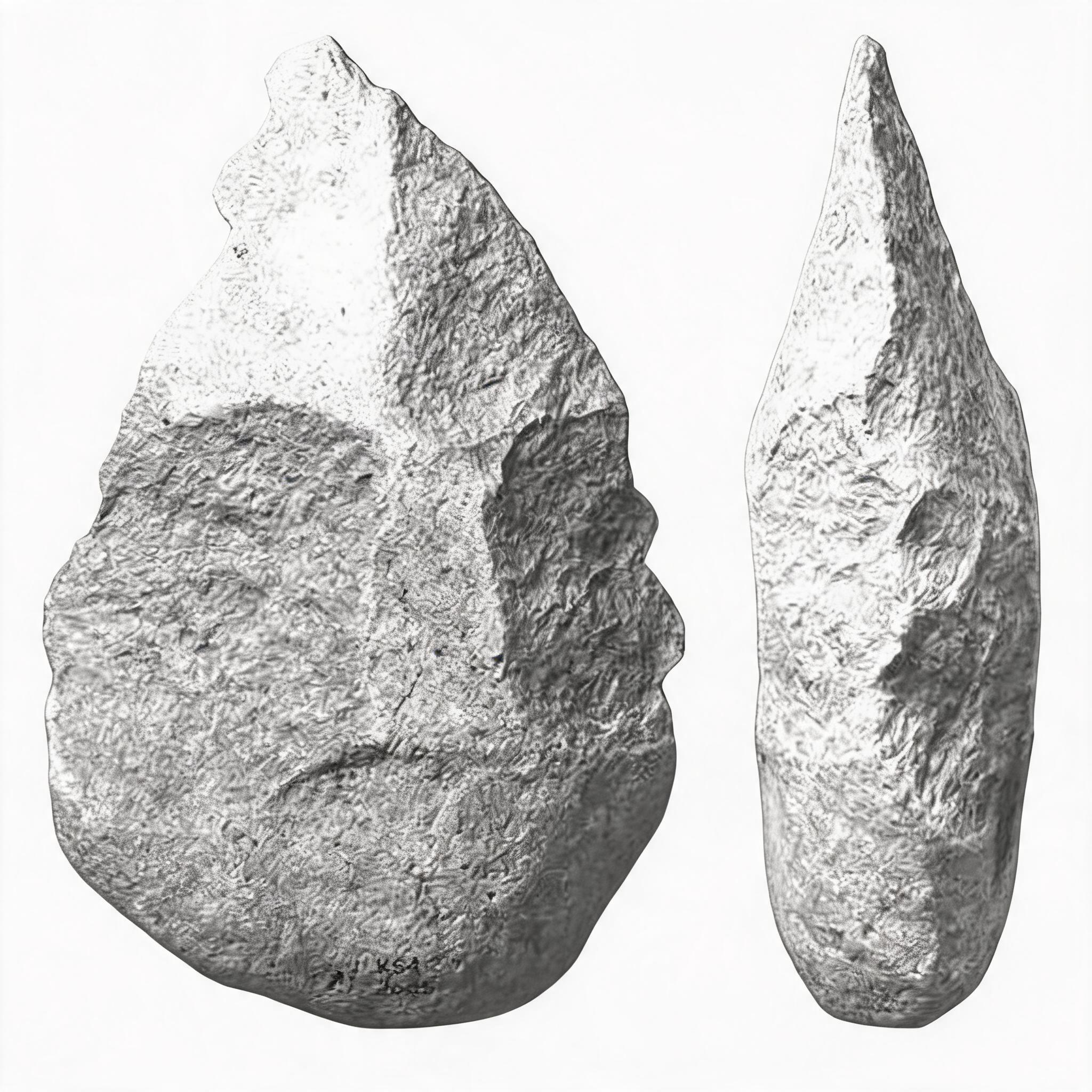
Third, the revolutionary significance of stone toolmaking.
When our ancestors began holding a rock in their right hand and bracing another in their left to strike flakes, their bodies were accomplishing something profoundly significant: the functional differentiation of left and right hands drove the functional differentiation of left and right brain hemispheres. Fine motor control of the hands demands the participation of vast numbers of cortical neurons, and sustained unilateral operations promoted the division of labor and cooperation between the two hemispheres.
Fourth, the power of language to reshape the brain.
Tools were growing more complex, social cooperation was expanding, linguistic ability was advancing. While the hands were knapping stone, the brain was simultaneously reorganizing itself. A brain capable of understanding "meet behind that rock tomorrow" had gained a critical dimension absent from a brain that could only process immediate threats and food: time. Language allowed humans to construct, within the brain, things that were not physically present—to plan, to negotiate, to transmit experience.
And so a positive feedback loop took shape:
A larger brain → More sophisticated tools → More complex cooperative language → More efficient energy acquisition and social organization → Selective pressure driving the brain to grow still larger...
This was not some pre-designed "evolutionary roadmap." It was random natural selection colliding with a self-reinforcing loop—and then, a miracle.
IV. The "No Fixed Nature" Thesis
In 1486, the Italian philosopher Pico della Mirandola wrote a speech later known as the "Manifesto of the Renaissance"—Oration on the Dignity of Man. In it, he placed in the mouth of God a speech to Adam that shattered all precedent: the essences of all other creatures, once prescribed, are bound by our laws—but you, unconstrained by any limit, may determine your own essence according to your free choice. You are your own honored and free shaper, able to mold yourself into whatever form you prefer.
In the American philosopher Samuel Stumpf's Philosophy: History and Problems, Pico's core argument is distilled into one concise formulation: "According to Pico, man has no nature; or rather, man's nature lies in his radical indeterminacy."
"Radical indeterminacy"—in the context of scholastic philosophy, this was a staggering claim. Because from the medieval Aristotelian-Thomistic tradition, every thing in the cosmos came with its own "factory manual": the acorn's manual says grow into an oak; the wolf's manual says hunt and live as a wolf; the angel's manual says take your place according to your angelic rank. Only man, Pico said—God gave you no fixed form. Your manual is blank. You fill it in yourself.
Pico identified a real phenomenon, but he supplied a theological explanation: this was a grace specially granted by God.
Today, we can re-understand this matter through the lens of evolutionary biology: humanity's "radical indeterminacy" is itself the result of an extreme form of specialization.
Other animals seem to have a "fixed essence" not because God handed them factory manuals, but because their specialization followed a path of single-track optimization along a specific ecological niche. The eagle's visual cortex is a dedicated piece of hardware; the bat's echolocation chip is a closed-loop system; the blue sheep's hooves and vestibular-balance algorithm are a climbing-only module—switch ecological niches and they fail. This is not a divine script; it is natural selection locking structure onto a specific task.
Human "indeterminacy" followed precisely the opposite track of specialization: optimize not any single task, but optimize the capacity to optimize itself. The prefrontal cortex's general-purpose learning circuits, the mirror neuron system's social modeling ability, the language module's symbolic operations, long-term working memory's experiential cache—this combinatorial arsenal yields not the empty freedom of "having no essence," but an exquisitely precise, unfathomably expensive piece of neural hardware, tuned by natural selection over seven million years until it became capable of "adapting to any adaptation."
Pico said man is his own shaper, but what he could not see was that the power to shape is not the magic of the soul—it is the biology of cortical folding. "Indeterminacy" did not cancel determination; it transformed determination itself into "plasticity." This is the true output of brain specialization—not a single weapon, but an armory capable of producing any weapon.
And so, the question:
What did other animals' specializations produce? What did human brain specialization produce?
V. The True Output of Brain Specialization: Civilization
At this point, we must ask a decisive question: what did the specialization of other animals produce? And what did the specialization of the human brain produce?
The blue sheep's specialization produced individual climbing ability. The cheetah's specialization produced individual burst speed. The eagle's specialization produced individual long-distance vision. When a single blue sheep dies, its hooves—whatever new abilities they may have acquired—do not pass on to the next generation. Every individual must start from scratch, applying genetically encoded behavioral patterns to operate those specialized organs.
The human brain's specialization produced something different: it produced accumulable collective knowledge.
This distinction is fundamental. A Homo sapiens mother could tell her child: "Across the river there is a kind of fruit. Only eat it once it turns red, or it's poisonous." Individual experience became a collective asset. What one person learned, the whole group could use.
And the invention of writing pushed this to a height unprecedented in evolutionary history. With writing, knowledge was no longer confined to the memory of the living—it could pass across generations. Aristotle has been dead for twenty-three hundred years, and his logic is still taught to students today. Newton has been dead for three hundred years, and his equations of motion still calculate satellite orbits today. Turing passed away over seventy years ago, and his papers still influence everyone who writes code today.
Every human individual, at birth, does not need to re-discover fire, re-invent the wheel, or re-derive universal gravitation from first principles. We stand atop a knowledge platform built layer by layer over hundreds of generations—and you do not even notice the platform exists, just as a fish does not notice water.
This is the true output of brain specialization. It made the human "ecological niche" no longer any specific natural environment—not the grassland, not the forest, not the coast. The human ecological niche is civilization itself.
This explains why humans are the only species distributed from the Arctic tundra to the Sahara Desert, from the Amazon rainforest to the International Space Station. Not because we evolved fur, or humps, or water sacs, or gills—but because our brain enabled us to make clothing, store water, build shelter, and regulate temperature and pressure. Every time the natural environment tried to bar the door, the brain designed a new tool to pry it open.
This is the highest form of human brain specialization: to specialize in a capacity that transcends any specific specialization.
VI. Closing
Humanity excels at nothing—except the brain.
This is neither humility nor pride; it is the most precise factual statement in evolutionary history. Humanity is a species that wagered its entire evolutionary stake on a single organ: no sharp teeth, no thick fur, no astonishing speed, no lethal venom... In pure physical combat, our ancestors were among the most unremarkable contestants on the African savanna.
Seven million years. A tripled brain volume. An expensive organ consuming one-fifth of the body's total energy—became the foundation for continued evolution.
A language system that allows experience to pass from generation to generation. A symbolic capacity that allows knowledge to accumulate across time and space. This wager transformed humanity from a marginal primate into a force that defines the face of the entire planet.
Looking back at this outcome, it is hard not to feel a certain awe. Not in praise of human greatness—evolution knows no concept of "greatness." It merely happened, amid countless random mutations and extinctions, to select a self-reinforcing loop.
This leads to a question worth deep reflection, one I will explore in a follow-up essay:
The human brain, specialized to its extreme, is now creating another entity that may possess a comparable capacity. Artificial intelligence is not a branch grown from the carbon-based tree of life, but it is becoming humanity's "extended specialization"—a cognitive vehicle no longer constrained by the physical boundaries of a biological brain.
That will be another story. And we are standing in its first chapter.
Zhigeng