Technological Innovation and Responsible Innovation Education
title: "Technological Innovation and Responsible Innovation Education" slug: "fanchunping-innovation-responsible-education.en" date: "2019-01-01" category: "education" author: "Fan Chunping" excerpt: "Innovation is a double-edged sword. The shift from pursuing innovation to constraining innovation with responsibility involves a paradigm shift in both innovation theory and practice. Responsible innovation education is key to the sustainability of civilization."
Technological Innovation and Responsible Innovation Education
Authors: Fan Chunping, Lu Peiwen, Wu Yue (School of Humanities and Social Sciences, Beijing Institute of Technology)
Published in Science & Technology China
I. From Innovation to Responsible Innovation
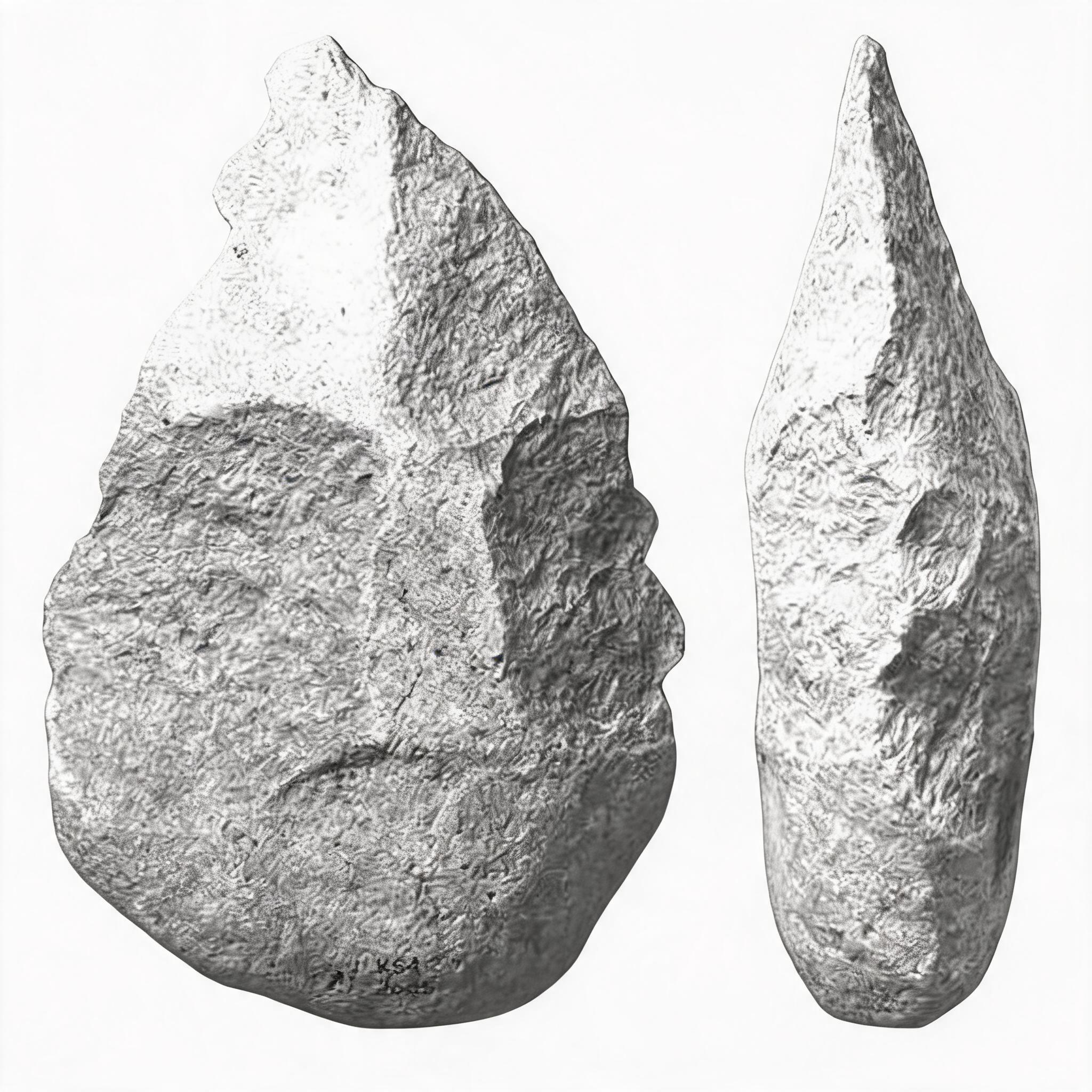
When our ancestors parted ways with the apes, they crafted nothing more than a stone knife—yet within that stone knife lay the seeds of nearly everything that would follow in human society.
In 1911, Schumpeter introduced the narrow concept of "innovation" from an economic perspective in The Theory of Economic Development: the establishment of a new production function. Since then, the concept has expanded continuously—from a collection of technologies to national systems, from the OECD's 1996 notion of a "knowledge-based economy" to China's 2012 adoption of innovation-driven development as a fundamental national policy.
Innovation in the broad sense is far wider—whenever an idea or method is considered new by an individual or group, it constitutes innovation.
Yet as technology has become alienated from human purpose, innovation, too, has revealed its alienating nature, becoming a double-edged sword. In the 1980s and 1990s, Hans Jonas proposed the ethics of responsibility; on this foundation, European philosophers later put forward the concept of "Responsible Innovation"—the stewardship of the future through collective management of present science and innovation.
II. Irresponsible Innovation and Its Harms
The article distinguishes between conventional responsibility and future responsibility.
Conventional responsibility refers to everyday moral and professional obligations, where consequences manifest in the present. The article cites the case of the Dongfeng Tianlong truck's "single-pipe incident"—a design flaw causing brake failure, where Dongfeng acknowledged only part of the problem while quietly correcting it in subsequent products.
Future responsibility concerns advanced technologies whose consequences often do not emerge immediately and carry hidden, deceptive qualities. The article uses "Fourth-Generation Housing" as an example—an innovation touted as an "aerial urban forest garden" that conceals enormous hidden risks: the enormous energy consumption of transporting cars via elevators, the increased structural load requiring natural ecosystems outside the city to be destroyed for materials, and an artificial ecological landscape that is fundamentally unsustainable.
III. The Urgency of Responsible Innovation Education and Feasible Approaches
Innovation is not the work of a single generation. The fundamental purpose of technological innovation is to bring well-being to humanity, including future generations. In today's context of technological explosion, the themes of the future and the themes of the present have already merged.
Three effective and feasible educational approaches exist:
First, specialized education—expanding responsible innovation content within technology and engineering ethics courses.
Second, permeation education—embedding educational objectives into general courses, ensuring that every science and engineering course offers ethical learning opportunities.
Third, cultural immersion—reflecting educational values in campus culture and professional norms.
Beijing Institute of Technology has offered a mandatory course on "Scientific Integrity and Academic Honesty" for master's and doctoral students since the 2012 cohort. Other Chinese universities have also introduced related courses, but these remain largely in the specialized education mode. The path toward integrating specialized education, permeation education, and cultural immersion is still a long one.
Published in Science & Technology China